India’s café culture is changing rapidly. Specialty coffee, premium beverages, compact coffee shops, takeaway counters, and experience-driven cafés are becoming increasingly popular across major cities. For aspiring café owners, this creates opportunities—but opening a successful café requires much more than buying an espresso machine and designing an attractive interior.
Café setup training India can help entrepreneurs understand the practical side of launching and managing a coffee business. From selecting essential equipment and planning the café layout to creating a profitable menu and training staff, structured preparation can reduce avoidable startup mistakes.
In 2026, café owners also need to consider customer experience, operational efficiency, delivery orders, digital payments, inventory control, and consistent beverage quality. This practical guide explains the key areas entrepreneurs should understand before setting up a café.
Why Café Setup Training Matters in 2026
A café combines hospitality, food service, retail, and business management. New entrepreneurs often underestimate the operational knowledge required to manage all these areas simultaneously.
A professional café setup training business program can provide practical knowledge before an entrepreneur invests significant capital.
Key Areas Covered in Café Training
| Training Area | Business Benefit |
| Equipment Selection | Avoids unnecessary purchases |
| Café Layout | Improves workflow |
| Menu Planning | Creates a manageable product range |
| Costing | Supports profitable pricing |
| Staff Training | Maintains consistency |
| Inventory | Reduces wastage |
| Customer Service | Improves café experience |
Training does not guarantee business success, but it can help entrepreneurs make more informed decisions.
Café Equipment: What Do You Actually Need?
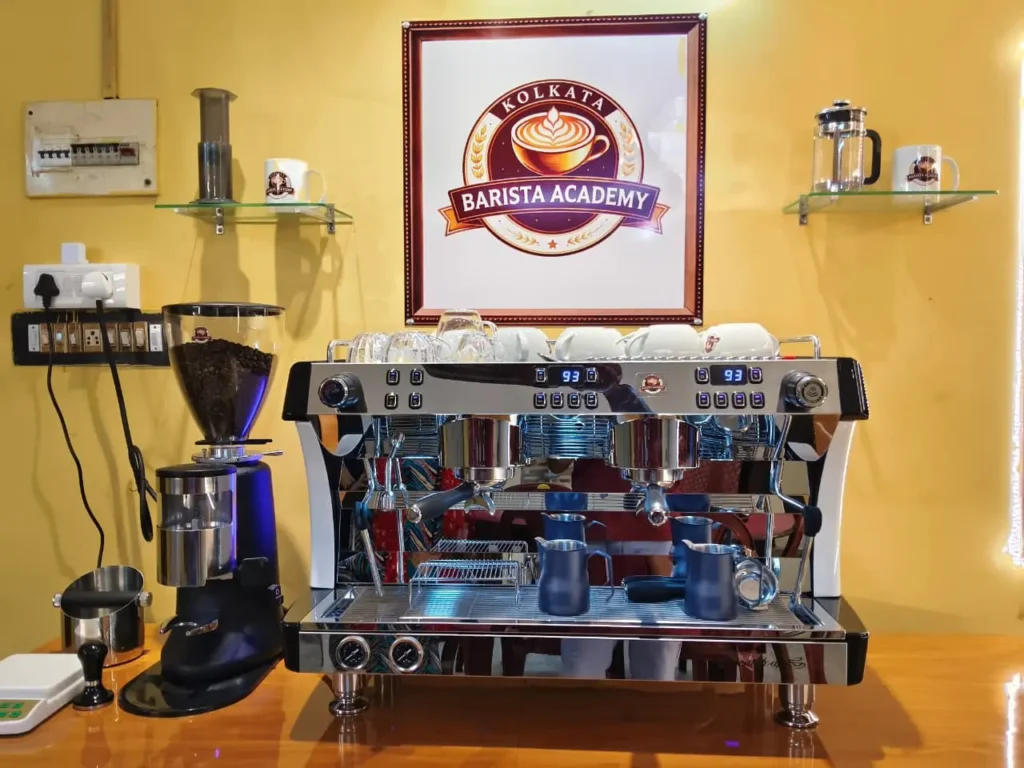
Equipment is one of the largest investments in a café. The right selection depends on the menu, expected sales volume, available space, and business model.
Essential Coffee Equipment
| Equipment | Primary Function |
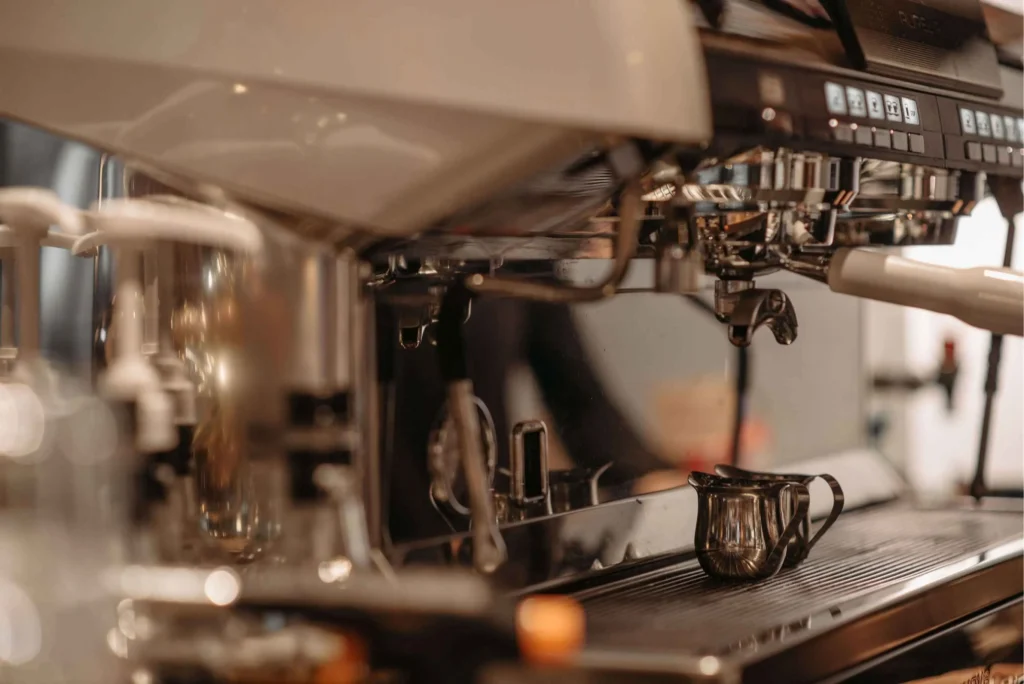
| Espresso Machine | Espresso-based beverages |
| Commercial Grinder | Consistent coffee grinding |
| Milk Pitchers | Milk steaming and latte art |
| Water Filtration System | Brewing water quality |
| Digital Scale | Accurate coffee recipes |
| Blender | Cold beverages |
| Refrigerator | Ingredient storage |
For a small café, buying every available piece of equipment at the beginning may unnecessarily increase the startup cost.
How to Select an Espresso Machine
Consider These Factors
- Expected daily beverage volume
- Number of group heads
- Steam capacity
- Serviceability
- Availability of spare parts
- Power requirements
- Warranty and maintenance support
The most expensive machine is not necessarily the best option for every café.
Understanding Coffee Grinder Requirements
The grinder directly influences espresso consistency.
Grinder Selection Factors
| Factor | Why It Matters |
| Burr Quality | Supports consistent grinding |
| Grind Adjustment | Allows recipe calibration |
| Speed | Important during busy periods |
| Durability | Suitable for commercial use |
| Retention | Influences coffee wastage |
A café should select grinders according to expected workload rather than choosing equipment based purely on appearance or price.
Café Layout: Designing for Workflow
A beautiful café can still perform poorly if the layout creates unnecessary movement.
The goal of café environment training is to help entrepreneurs understand how customers, staff, equipment, ingredients, and orders move through the space.
Basic Café Zones
| Zone | Purpose |
| Entrance | Customer access |
| Ordering Counter | Orders and payment |
| Coffee Station | Beverage preparation |
| Food Preparation | Snack and food production |
| Pickup Area | Order collection |
| Seating Area | Customer dining |
| Storage | Inventory management |
| Cleaning Area | Washing and sanitation |
A good layout reduces unnecessary movement and helps employees work efficiently.

Front-of-House vs Back-of-House
A practical café layout generally separates customer-facing areas from operational areas.
Front-of-House
This includes:
- Entrance
- Seating
- Ordering counter
- Display counter
- Customer pickup zone
Back-of-House
This may include:
- Ingredient storage
- Refrigeration
- Food preparation
- Cleaning area
- Staff storage
Separating these areas helps maintain a cleaner and more organized workflow.
Creating a Café Layout for Small Spaces
Small cafés require careful space planning because every square foot matters.
Small Café Layout Priorities
| Priority | Objective |
| Compact Counter | Save operational space |
| Vertical Storage | Increase storage capacity |
| Efficient Equipment Placement | Reduce staff movement |
| Limited Seating | Preserve workflow |
| Clear Pickup Area | Avoid customer congestion |
For a small-format café, an efficient layout can be more valuable than expensive décor.
Menu Planning: Start Small and Focused
A common mistake among first-time café owners is creating an extremely large menu.
A focused menu can make purchasing, inventory, staff training, and quality control easier.
Example Café Menu Structure
| Category | Possible Items |
| Espresso | Espresso, Americano |
| Milk Coffee | Latte, Cappuccino |
| Cold Coffee | Iced Latte, Cold Coffee |
| Specialty Coffee | Signature Beverages |
| Tea | Green Tea, Milk Tea |
| Snacks | Sandwiches, Wraps |
| Bakery | Croissants, Brownies |
| Desserts | Cakes, Pastries |
The actual menu should depend on customer demand, equipment, staff capability, ingredient availability, and target pricing.

Menu Engineering for Better Business Decisions
Menu engineering involves understanding which products sell well and which generate better margins.
Track These Metrics
| Metric | Why Track It? |
| Selling Price | Determines revenue |
| Ingredient Cost | Measures product cost |
| Preparation Time | Measures workflow efficiency |
| Sales Volume | Shows popularity |
| Contribution Margin | Supports profitability decisions |
A product can be popular without necessarily being highly profitable, so café owners should evaluate both sales and margins.
Coffee Training for Café Owners
A café owner does not necessarily need to work as a full-time barista, but basic technical knowledge is highly useful.
Essential Coffee Skills
- Espresso extraction
- Grinder calibration
- Milk steaming
- Beverage recipes
- Latte art fundamentals
- Manual brewing
- Coffee storage
- Equipment cleaning
Understanding these fundamentals makes it easier to monitor staff performance and maintain beverage consistency.
Café Entrepreneur Training: Beyond Coffee
Opening a café requires entrepreneurial skills in addition to coffee knowledge.
Café entrepreneur training can introduce business owners to the commercial side of the industry.
Important Entrepreneurial Skills
| Skill | Application |
| Budgeting | Controls startup expenses |
| Costing | Supports pricing |
| Inventory Management | Reduces wastage |
| Supplier Management | Controls purchasing |
| Staff Management | Improves productivity |
| Sales Analysis | Tracks business performance |
| Marketing | Builds customer awareness |
This broader approach helps transform coffee knowledge into a workable business model.

Staff Training and Café Operations
Even a well-designed café can struggle if employees are not properly trained.
Staff Training Should Cover
Beverage Preparation
Employees should follow standardized recipes for consistency.
Customer Service
Staff should understand communication, order confirmation, and basic complaint handling.
Hygiene
Cleaning and food-handling procedures should be part of daily operations.
Equipment Care
Employees should know how to clean and maintain coffee machines and grinders according to established procedures.
Technology in Modern Café Operations
Café businesses in 2026 increasingly depend on digital tools to manage daily operations.
Useful Technology
| Technology | Business Use |
| POS System | Billing and sales tracking |
| Digital Payments | Faster transactions |
| Inventory Software | Stock monitoring |
| Online Ordering | Delivery and takeaway |
| Customer Database | Marketing insights |
| Sales Analytics | Product performance |
Technology should simplify operations rather than make the business unnecessarily complicated.
Budgeting Your Café Setup
Startup costs vary widely depending on the concept and location.
Main Investment Categories
| Expense | Budget Consideration |
| Property Deposit | Depends on location |
| Interior | Based on design and size |
| Coffee Equipment | Based on menu and volume |
| Kitchen Equipment | Based on food offerings |
| Furniture | Depends on seating |
| Licences | Depends on applicable requirements |
| Initial Inventory | Based on menu |
| Marketing | Based on launch strategy |
| Working Capital | Essential for early operations |
Entrepreneurs should keep an emergency working-capital reserve rather than spending their entire budget before launch.
How to Reduce Unnecessary Startup Costs
A lean café model can help first-time owners manage financial risk.
Practical Cost-Control Strategies
- Start with a focused menu.
- Purchase essential equipment first.
- Avoid excessive interior decoration.
- Negotiate supplier terms where possible.
- Monitor food and coffee wastage.
- Train staff before opening.
- Track product-level costs.
- Maintain sufficient working capital.
The goal is not simply to reduce expenses but to spend money where it directly improves operations or customer experience.
What to Check Before Opening
Before launching, entrepreneurs should complete a structured readiness review.
Café Launch Checklist
| Area | Check |
| Location | Footfall and accessibility |
| Equipment | Installed and tested |
| Menu | Recipes standardized |
| Suppliers | Ingredients available |
| Staff | Properly trained |
| POS | Operational |
| Hygiene | Procedures established |
| Branding | Signage and packaging ready |
| Marketing | Launch campaign prepared |
| Working Capital | Emergency reserve available |
A soft-launch period can also help identify operational problems before the café becomes fully busy.
Who Should Consider Café Setup Training India?
Professional café training can be useful for:
- First-time café owners
- Coffee enthusiasts
- Hospitality professionals
- Existing café employees
- Entrepreneurs changing careers
- Investors entering the coffee business
The ideal training program should combine coffee preparation with practical business knowledge.
Conclusion
Café Setup Training India is increasingly relevant for entrepreneurs who want to build a coffee business with a structured approach. Equipment selection, layout planning, menu engineering, staff training, costing, inventory management, and customer experience all influence how efficiently a café operates.
In 2026, aspiring owners should look beyond attractive interiors and focus on creating a business model that can deliver consistent products while controlling operational costs.
Whether you are planning a compact takeaway café, a specialty coffee shop, or a larger hospitality concept, practical café setup training India, café entrepreneur training, and café business training India can help you understand the decisions involved before committing your investment.
Frequently Asked Questions
1. What is café setup training India?
Café setup training India teaches aspiring entrepreneurs about coffee equipment, café layout, menu planning, costing, staffing, workflow, and daily operations.
2. What equipment is essential for a coffee shop?
An espresso machine, commercial grinder, refrigerator, blender, water filtration system, digital scale, and suitable food-preparation equipment are common requirements.
3. How should I plan my café layout?
Design the layout around customer movement, staff workflow, equipment placement, storage, preparation, ordering, and pickup areas.
4. How many products should a new café menu have?
There is no universal number. A focused menu that matches your target audience, equipment, staff capacity, and ingredient availability is generally easier to manage.
5. Is coffee training necessary for café owners?
Owners do not necessarily need professional barista-level expertise, but understanding espresso, milk steaming, brewing, costing, and equipment operation can be highly beneficial.
6. What is café entrepreneur training?
Café entrepreneur training focuses on the business side of café ownership, including budgeting, menu costing, suppliers, staffing, operations, and business planning.
7. How can I reduce café setup costs?
Start with essential equipment, maintain a focused menu, avoid excessive interiors, control inventory, and retain working capital for early operating expenses.
8. What is café environment training?
Café environment training focuses on customer experience, ambience, cleanliness, seating, service workflow, and creating an efficient café environment.
9. Should a café use a POS system?
A POS system can help manage billing, sales records, product performance, and operational data, making it useful for many modern cafés.
10. Is café setup training useful for first-time entrepreneurs?
Yes. Structured training can help first-time entrepreneurs understand the practical requirements of opening and managing a café before investing significant capital.