
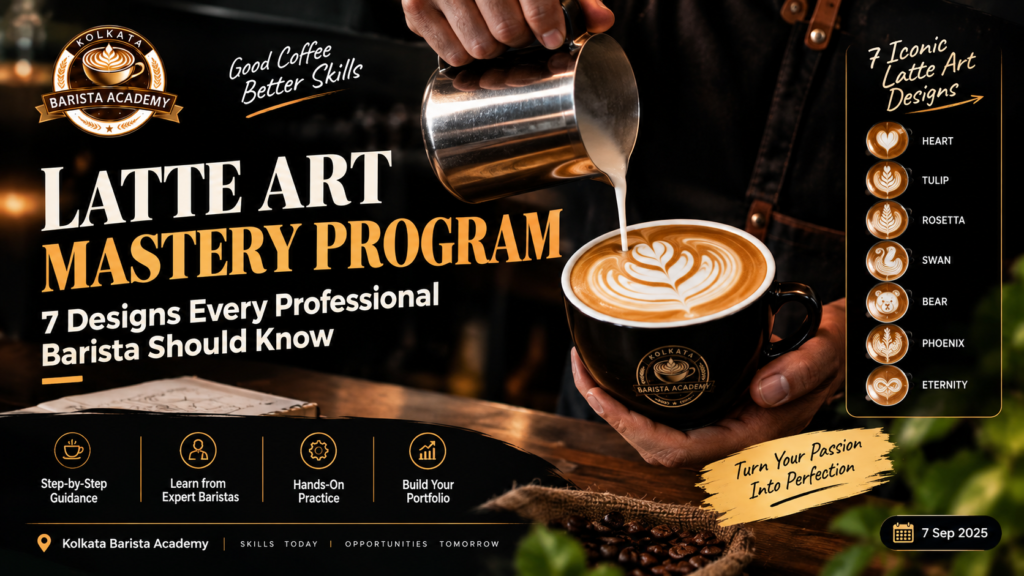
Latte art has become an important skill for modern baristas, especially in specialty cafés where coffee quality and presentation both influence the customer experience. A well-prepared espresso and properly textured milk can create the foundation for visually appealing patterns, but developing consistency requires much more than learning a single pouring technique.
A structured latte art mastery program helps baristas understand milk texturing, pouring control, cup positioning, contrast, symmetry, and pattern development. For students who have already learned basic espresso preparation, advanced latte art can be a natural next step in professional coffee training.
Whether you are considering a latte art course, an advanced coffee techniques course, or broader coffee brewing courses, improving your milk and pouring skills can add another level to your barista knowledge.
In this guide, we explore seven latte art designs that every aspiring professional barista should understand and the practical skills required to create them.
Why Latte Art Matters for Professional Baristas
Latte art is not only about making coffee look attractive. It also reflects the barista’s ability to control milk texture and pouring technique.
Before focusing on complex patterns, a barista needs a strong foundation in beverage preparation.
Core Skills Behind Good Latte Art
| Skill | Why It Matters |
| Espresso Preparation | Creates a suitable coffee base |
| Milk Texturing | Produces smooth microfoam |
| Pouring Control | Helps shape the design |
| Cup Positioning | Supports pattern placement |
| Timing | Prevents separation of milk texture |
| Consistency | Improves repeatability |
A latte art mastery program should therefore focus on the complete process rather than teaching students to copy designs without understanding milk texture.
The Foundation: Mastering Microfoam
Before learning advanced designs, students need to develop consistent milk texturing.
Microfoam is smooth, controlled milk texture that allows the milk and espresso to create visible contrast during pouring.
What Students Learn During Milk Texturing Practice
Steam Wand Positioning
Proper positioning helps introduce air at the beginning and then create a smoother texture.
Milk Movement
Controlled movement helps integrate the milk and create a more uniform consistency.
Temperature Awareness
Understanding temperature control is important for beverage quality and milk texture.

Pitcher Handling
The way a pitcher is held and moved can affect pouring speed and pattern formation.
| Foundation Skill | Role in Latte Art |
| Smooth Microfoam | Creates clean patterns |
| Controlled Flow | Improves design accuracy |
| Proper Espresso Base | Enhances contrast |
| Stable Hand Movement | Supports symmetry |
| Correct Cup Angle | Helps pattern development |
These skills form the base of any professional latte art course.
1. The Heart: The Starting Point for Latte Art
The heart is one of the first designs many baristas learn. Although it appears simple, producing a clean and symmetrical heart requires proper milk texture and controlled pouring.
What You Learn
- Centered pouring
- Controlled milk flow
- Cup positioning
- Basic finishing technique
- Pattern symmetry
Why the Heart Is Important
The heart helps students understand how milk begins to interact with the espresso surface.
| Skill Developed | Professional Benefit |
| Centering | Better design placement |
| Flow Control | Improved pouring accuracy |
| Symmetry | Cleaner presentation |
| Timing | Better pattern formation |
A consistent heart is often a strong indication that a barista is ready to progress toward more detailed patterns.
2. The Tulip: Building Layers and Control
The tulip introduces the concept of creating multiple layers within one design. Instead of producing a single shape, the barista needs to control repeated movements and maintain visual balance.
Skills Required for a Tulip
Layer Placement
Each section of the design needs to be placed with consistency.
Flow Adjustment
Milk flow may need to change as the design develops.

Controlled Movement
Small changes in pitcher movement can influence the final pattern.
| Challenge | Skill Required |
| Multiple Layers | Pouring control |
| Pattern Balance | Cup positioning |
| Clean Separation | Milk texture |
| Consistent Shape | Hand stability |
The tulip is an important progression point in a latte art mastery program because it teaches baristas to combine multiple pouring actions.
3. The Rosetta: Developing Advanced Movement
The rosetta is one of the most recognisable latte art designs in specialty coffee.
Unlike a heart, the rosetta requires more controlled movement between the pitcher and cup.
Key Rosetta Skills
- Stable microfoam
- Controlled pitcher movement
- Consistent flow
- Pattern spacing
- Leaf formation
- Finishing technique
Why the Rosetta Requires Practice
The design depends on multiple elements working together. If the milk is too thick or too thin, the pattern may not develop clearly.
| Rosetta Element | Training Focus |
| Leaf Pattern | Controlled movement |
| Symmetry | Stable hand position |
| Stem | Finishing technique |
| Contrast | Espresso and milk balance |
For baristas interested in advanced presentation skills, rosetta practice is often an important part of a latte art course.
4. The Swan: Combining Multiple Techniques
The swan is a more advanced design because it combines different pouring movements into one composition.
Instead of repeating a single pattern, the barista may need to integrate body, wings, and neck elements while maintaining overall balance.

Skills That Support Swan Latte Art
| Skill | Application |
| Pattern Layering | Building the body |
| Fine Pouring Control | Creating smaller details |
| Direction Changes | Developing the composition |
| Symmetry | Maintaining visual balance |
| Timing | Preventing pattern disruption |
A swan is generally easier to approach after gaining confidence with basic hearts, tulips, and rosettas.
5. The Wave Heart: Improving Flow and Symmetry
The wave heart adds movement to the basic heart design. It can help students practice rhythm and consistency during the pouring process.
What Makes It Different?
Instead of creating one simple shape, the barista introduces controlled movement before completing the final design.
This can help improve:
- Wrist stability
- Pouring rhythm
- Milk flow control
- Pattern balance
- Finishing accuracy
| Training Focus | Outcome |
| Controlled Movement | Better pattern development |
| Stable Flow | Improved consistency |
| Symmetrical Design | Professional presentation |
| Finishing Technique | Cleaner artwork |
Practicing variations of familiar designs can be useful before moving toward more complex latte art patterns.
6. The Winged Tulip: Taking the Tulip Further
A winged tulip is an advanced variation that combines layered pouring with additional movement.
This design can challenge a barista’s ability to maintain shape while introducing new visual elements.
Why It Is an Advanced Pattern
Multiple Movements
The design requires more than one pouring action.
Pattern Placement
Each element needs to be positioned correctly.
Milk Consistency
The milk texture must remain suitable throughout the pour.
| Design Challenge | Required Skill |
| Layering | Pour control |
| Wings | Directional movement |
| Balance | Cup positioning |
| Fine Details | Stable microfoam |
This type of practice can help learners move beyond basic patterns in an advanced coffee techniques course.
7. The Free Pour Combination: Creating Your Own Style
After mastering established designs, experienced baristas can begin combining familiar elements.
For example, a design may use characteristics learned from hearts, tulips, and rosettas.
The goal is not simply to create something complicated. A professional barista should focus on:
- Balance
- Clean contrast
- Symmetry
- Consistency
- Repeatability
Creative Practice vs. Random Pouring
| Approach | Learning Outcome |
| Repeating Basic Designs | Builds consistency |
| Practicing Variations | Improves control |
| Combining Patterns | Develops creativity |
| Reviewing Results | Identifies improvement areas |
A complete latte art mastery program should encourage students to master the fundamentals before experimenting with advanced designs.
A Suggested Progression for Learning Latte Art
Students can develop their skills gradually instead of immediately attempting the most complex design.
Beginner to Advanced Progression
| Stage | Recommended Focus |
| Stage 1 | Milk texturing |
| Stage 2 | Basic heart |
| Stage 3 | Tulip |
| Stage 4 | Rosetta |
| Stage 5 | Wave patterns |
| Stage 6 | Swan |
| Stage 7 | Combination designs |
This structured approach can make practice more focused and help learners identify the skills they need to improve.
How Often Should a Barista Practice Latte Art?
Consistency develops through regular, focused practice. However, repeating the same mistake without feedback may slow improvement.
A Better Practice Approach
Focus on One Variable at a Time
For example, students can focus first on milk texture before worrying about complex patterns.
Record Consistency
Comparing multiple attempts can help identify whether the design is improving.
Practice Basic Patterns Again
Returning to hearts and tulips can improve foundational control.
| Practice Focus | Expected Improvement |
| Milk Texture | Smoother patterns |
| Flow Control | Better shape formation |
| Cup Position | Improved placement |
| Hand Movement | Greater consistency |
| Pattern Repetition | Better accuracy |
How Latte Art Connects With Advanced Coffee Skills
Latte art is one part of professional coffee education. Students looking to expand their knowledge can combine it with other specialty coffee skills.
Coffee Skills Beyond Latte Art
Advanced Espresso Techniques
An advanced coffee techniques course may help learners explore extraction variables, recipe consistency, grinder calibration, and coffee preparation methods.
Manual Brewing
Coffee brewing courses can introduce different brewing methods, coffee-to-water ratios, extraction concepts, and recipe development.
Sensory Development
A coffee cupping workshop can help students understand aroma, flavour, acidity, sweetness, body, and aftertaste.
| Training Area | Primary Focus |
| Latte Art | Milk texture and pouring |
| Advanced Coffee Techniques | Espresso and preparation skills |
| Coffee Brewing | Alternative brewing methods |
| Coffee Cupping | Sensory evaluation |
| Café Workflow | Professional service skills |
Together, these areas can help baristas build a broader understanding of specialty coffee.

Common Mistakes When Learning Latte Art
Poor Milk Texture
Latte art begins with properly textured milk. If the texture is inconsistent, even the correct pouring movement may not create a clean pattern.
Pouring Too Early or Too Late
Timing influences how the milk interacts with the espresso surface.
Focusing on Complex Designs Too Soon
Trying to create a swan before mastering a heart can make progress more difficult.
Ignoring Espresso Quality
The coffee base plays an important role in contrast and overall presentation.
Who Should Join a Latte Art Mastery Program?
A latte art mastery program can be suitable for:
- Aspiring professional baristas
- Existing café employees
- Hospitality students
- Coffee enthusiasts
- Baristas upgrading their skills
- Café owners who want to understand beverage quality
Students with some basic knowledge of espresso and milk steaming may find it easier to progress into advanced designs.
Conclusion
A latte art mastery program helps baristas move beyond basic beverage preparation and develop greater control over milk texture, pouring, timing, and presentation.
The seven important designs—heart, tulip, rosetta, swan, wave heart, winged tulip, and free-pour combinations—represent different stages of skill development. However, the goal is not simply to memorise patterns. Strong latte art begins with consistent espresso preparation and properly textured milk.
For learners interested in a latte art course, an advanced coffee techniques course, coffee brewing courses, or a coffee cupping workshop, developing multiple specialty coffee skills can create a stronger professional foundation.
With structured learning and repeated hands-on practice, aspiring baristas can improve from basic pours to more advanced and creative latte art designs while building greater confidence in a professional café environment.
Frequently Asked Questions
1. What is a latte art mastery program?
A latte art mastery program is an advanced training program focused on milk texturing, pouring control, pattern development, and improving the consistency of latte art designs.
2. Which latte art design should beginners learn first?
The heart is often a suitable starting point because it helps learners understand milk flow, cup positioning, centering, and basic pattern formation.
3. Is the rosetta difficult to learn?
The rosetta requires controlled milk texture and coordinated pitcher movement, so it is generally easier to learn after mastering basic pouring techniques.
4. Do I need barista experience before joining a latte art course?
Basic knowledge of espresso preparation and milk steaming can be helpful, although entry requirements depend on the specific training program.
5. Why is milk texture important for latte art?
Milk texture affects flow, contrast, and the ability to create clean and consistent patterns on the surface of an espresso-based beverage.
6. What is the difference between a latte art course and an advanced coffee techniques course?
A latte art course focuses primarily on milk texturing and pouring, while an advanced coffee techniques course may cover additional skills such as espresso calibration, extraction, grinder adjustment, and recipe consistency.
7. Can coffee brewing courses help a professional barista?
Yes. Coffee brewing courses can help baristas understand alternative brewing methods, extraction principles, recipes, and a broader range of coffee preparation techniques.
8. What happens in a coffee cupping workshop?
A coffee cupping workshop generally introduces sensory evaluation, helping participants explore aroma, flavour, acidity, sweetness, body, and aftertaste.
9. How long does it take to master latte art?
Learning speed varies depending on previous experience, milk-steaming skills, practice frequency, trainer guidance, and the complexity of the designs being practiced.
10. Which advanced latte art designs should professional baristas know?
After mastering foundational patterns, professional baristas may progress to designs such as tulips, rosettas, swans, winged tulips, wave patterns, and creative free-pour combinations.