Specialty coffee has transformed from a niche hobby into a mainstream profession. In Kolkata, the demand for skilled baristas has grown exponentially as new cafes open across Salt Lake, Park Street, and Dum Dum. However, many aspiring coffee professionals are confused about where to start. Should you master the delicate pour-over, the robust French press, or the versatile AeroPress?
This guide compares these three manual brewing methods in detail. Whether you are searching for coffee brewing courses to start a cafe career or looking for a barista course in Kolkata to upgrade your skills, understanding these methods will help you make an informed decision. Each method offers unique flavor profiles, skill requirements, and equipment needs.
Why Manual Brewing Skills Matter in 2026
Manual brewing is no longer just for coffee enthusiasts. Professional baristas are expected to master multiple extraction methods. Cafes now feature brew bars where customers watch their coffee being made by hand. This creates theater and builds trust.
A barista who only knows how to operate an espresso machine is incomplete. Advanced coffee techniques course content now includes manual brewing as a core module. Employers specifically ask for candidates who can dial in a pour-over, teach a customer the French press process, or use an AeroPress for a quick single cup.
Method 1: Pour-Over Coffee
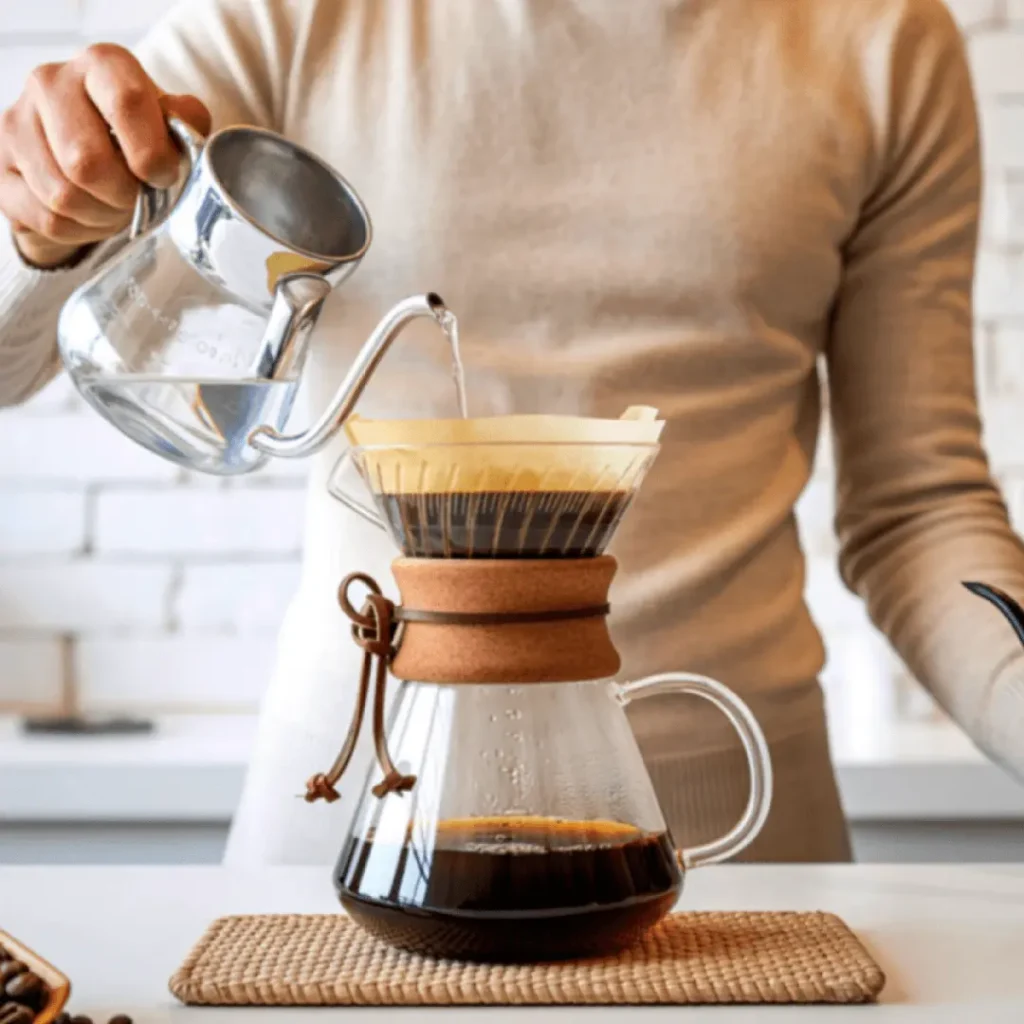
The pour-over method involves pouring hot water over coffee grounds in a filter cone. Water passes through the grounds and filter by gravity, extracting flavors into a carafe or cup below.
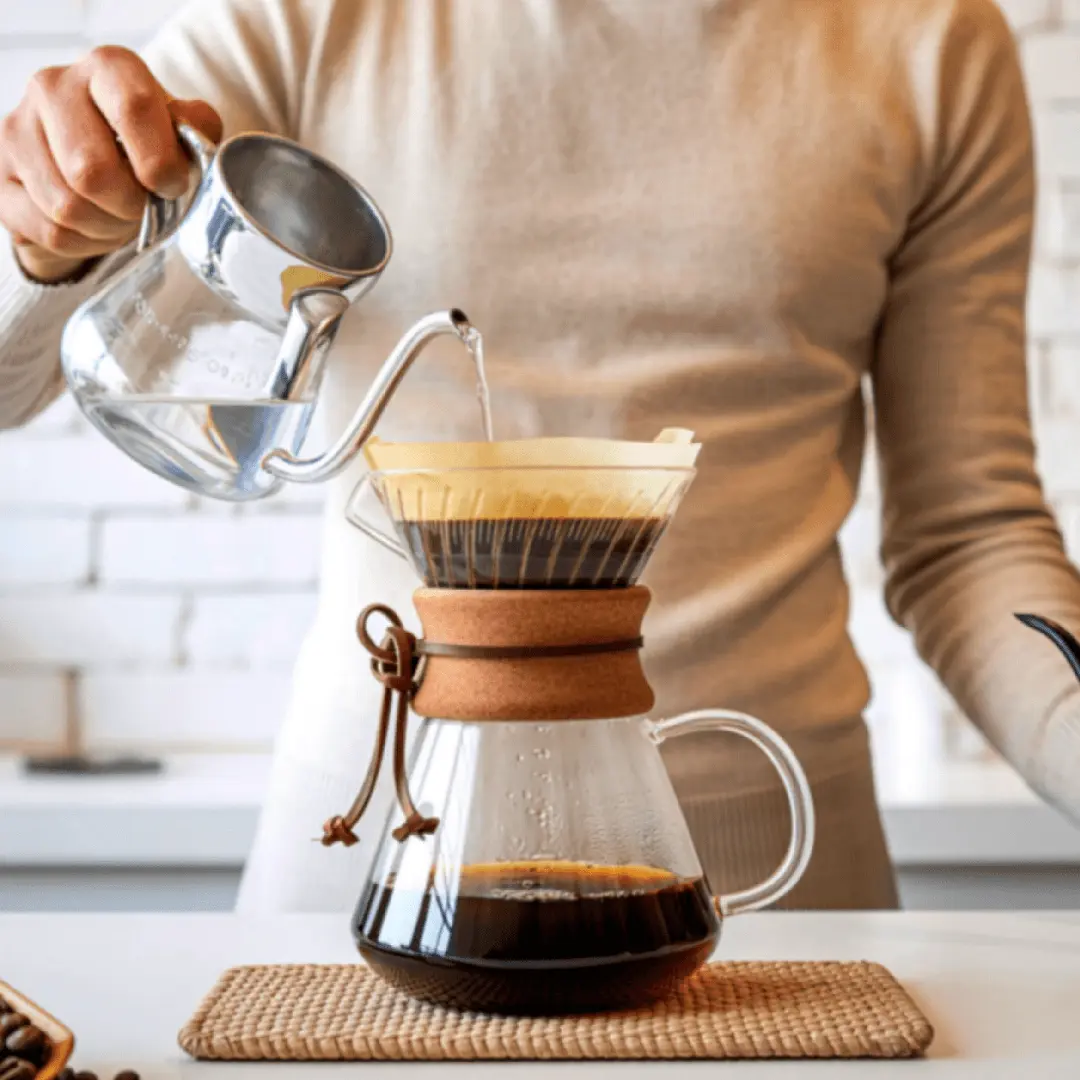
How Pour-Over Works
| Component | Details |
| Equipment Needed | Pour-over dripper (V60, Chemex, Kalita Wave), paper filters, gooseneck kettle, scale, grinder |
| Grind Size | Medium-fine to medium (similar to table salt) |
| Water Temperature | 92-96°C (198-205°F) |
| Brew Time | 2.5 to 4 minutes |
| Typical Coffee Volume | 250-500 ml per batch |
Flavor Profile of Pour-Over
Pour-over produces a clean, bright, and tea-like cup. The paper filter traps oils and fine particles, resulting in a crisp body. Flavor notes are highly pronounced. Light roasts shine with this method. You can taste fruity, floral, or citrus notes clearly.
Skill Level Required
Pour-over is the most technically demanding manual method. It requires:
- Consistent pouring technique and flow rate.
- Precise water temperature control.
- Understanding of bloom phase and extraction timing.
- Ability to adjust grind size based on taste.
Beginners often struggle with uneven extraction. However, once mastered, pour-over offers the most control and the highest ceiling for flavor expression.
Best For
- Coffee professionals aiming for specialty cafe roles.
- Home brewers who enjoy a ritualistic morning routine.
- Tasting single-origin coffees to identify subtle flavor notes.
Method 2: French Press
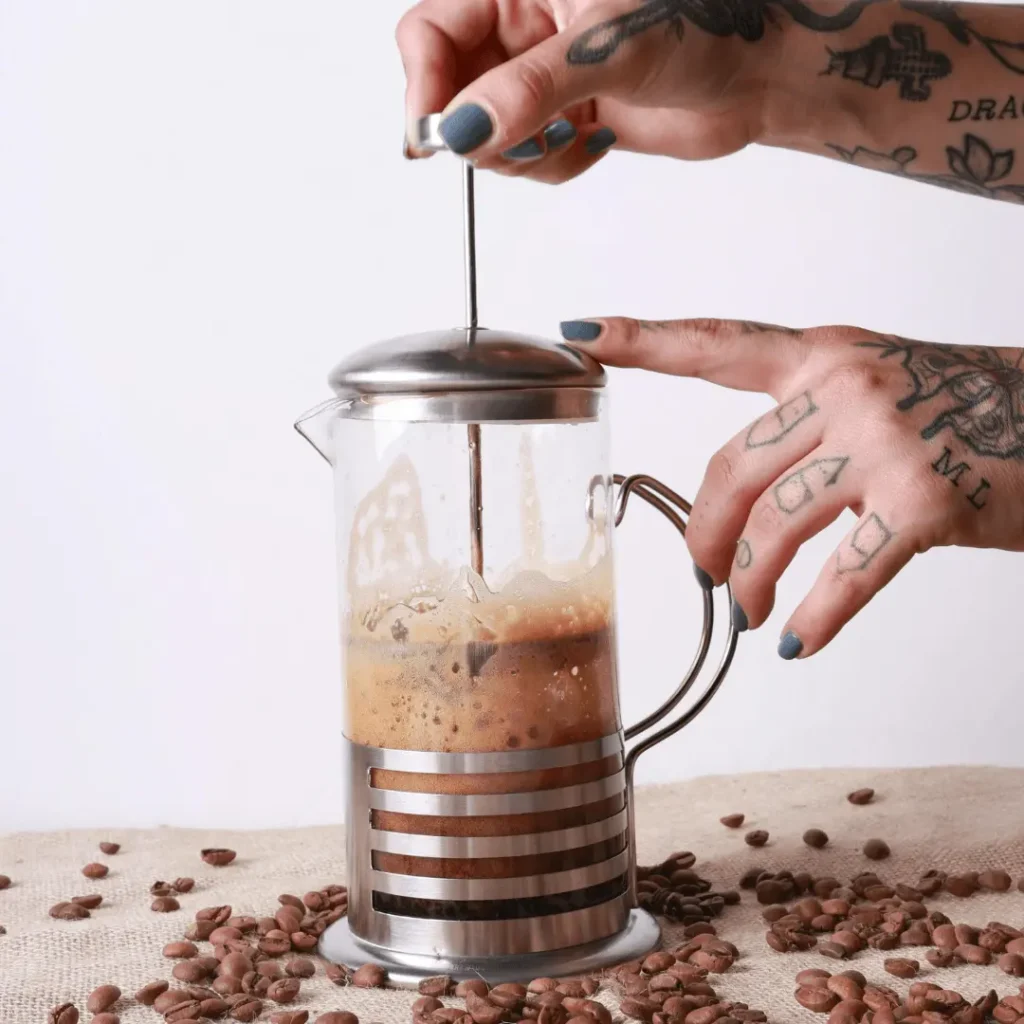
The French press, also known as a press pot or plunger pot, immerses coffee grounds in hot water. After steeping, a metal mesh filter presses down to separate the grounds from the liquid.
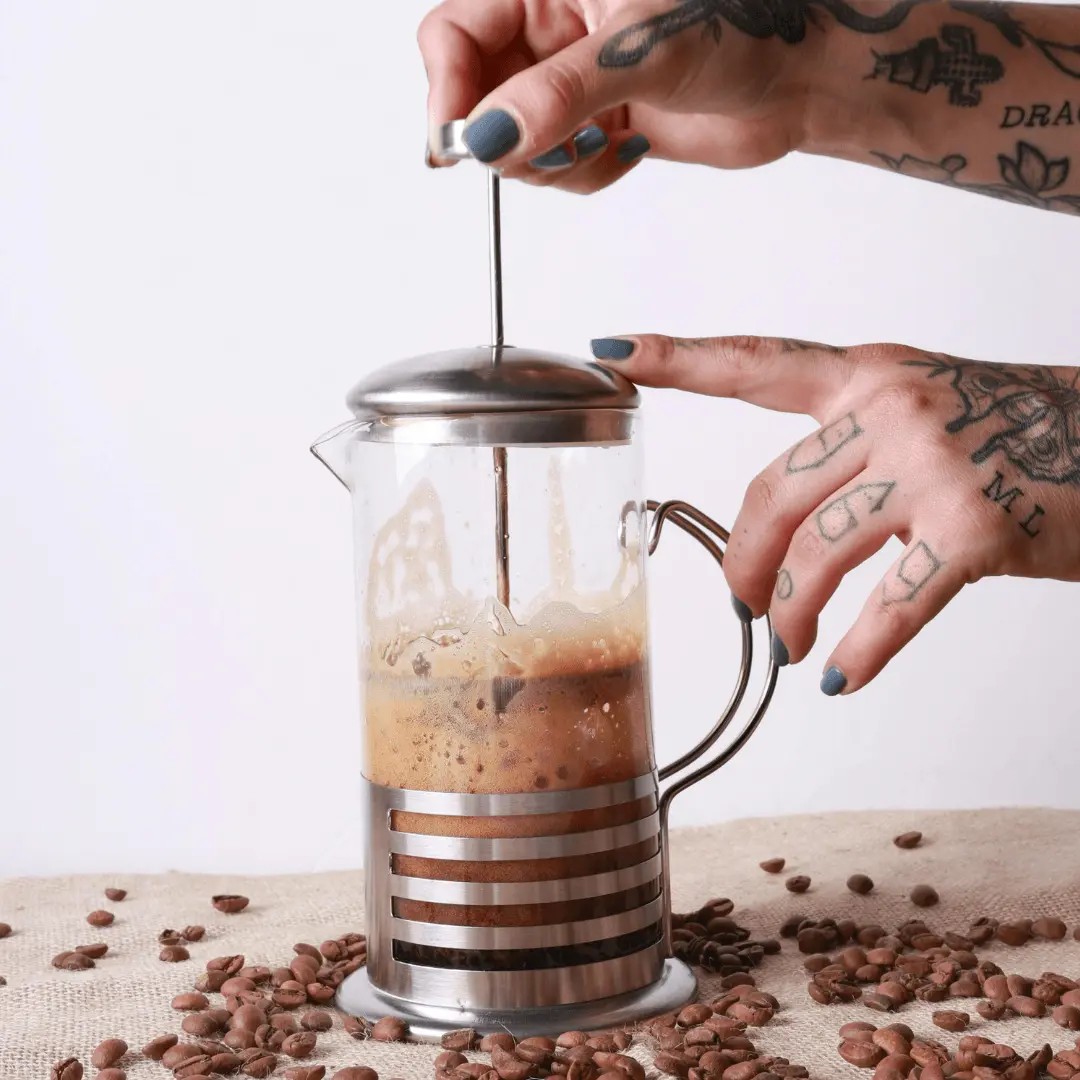
How French Press Works
| Component | Details |
| Equipment Needed | French press carafe, metal mesh plunger, coarse grinder, kettle, spoon |
| Grind Size | Coarse (similar to breadcrumbs or sea salt) |
| Water Temperature | 90-96°C (195-205°F) |
| Brew Time | 4 to 5 minutes |
| Typical Coffee Volume | 350 ml to 1 liter per batch |
Flavor Profile of French Press
French press produces a full-bodied, rich, and heavy cup. The metal mesh filter allows natural oils and fine sediment to pass through. This creates a thick mouthfeel. Chocolatey, nutty, and earthy notes are emphasized. Dark roasts perform particularly well.
Skill Level Required
French press is the most beginner-friendly manual method. It requires:
- Basic measurement of coffee and water.
- Ability to set a timer for 4 minutes.
- Gentle plunging without forcing.
- Immediate decanting to stop extraction.
The main challenge is avoiding bitterness. Over-steeping or grinding too fine will produce a harsh, astringent cup. However, the margin for error is much wider than pour-over.
Best For
- Beginners starting their coffee brewing courses journey.
- Brewing coffee for multiple people at once.
- Those who enjoy heavy, bold, and oily coffee.
- Cafes that offer French press as a table-side service.
Method 3: AeroPress
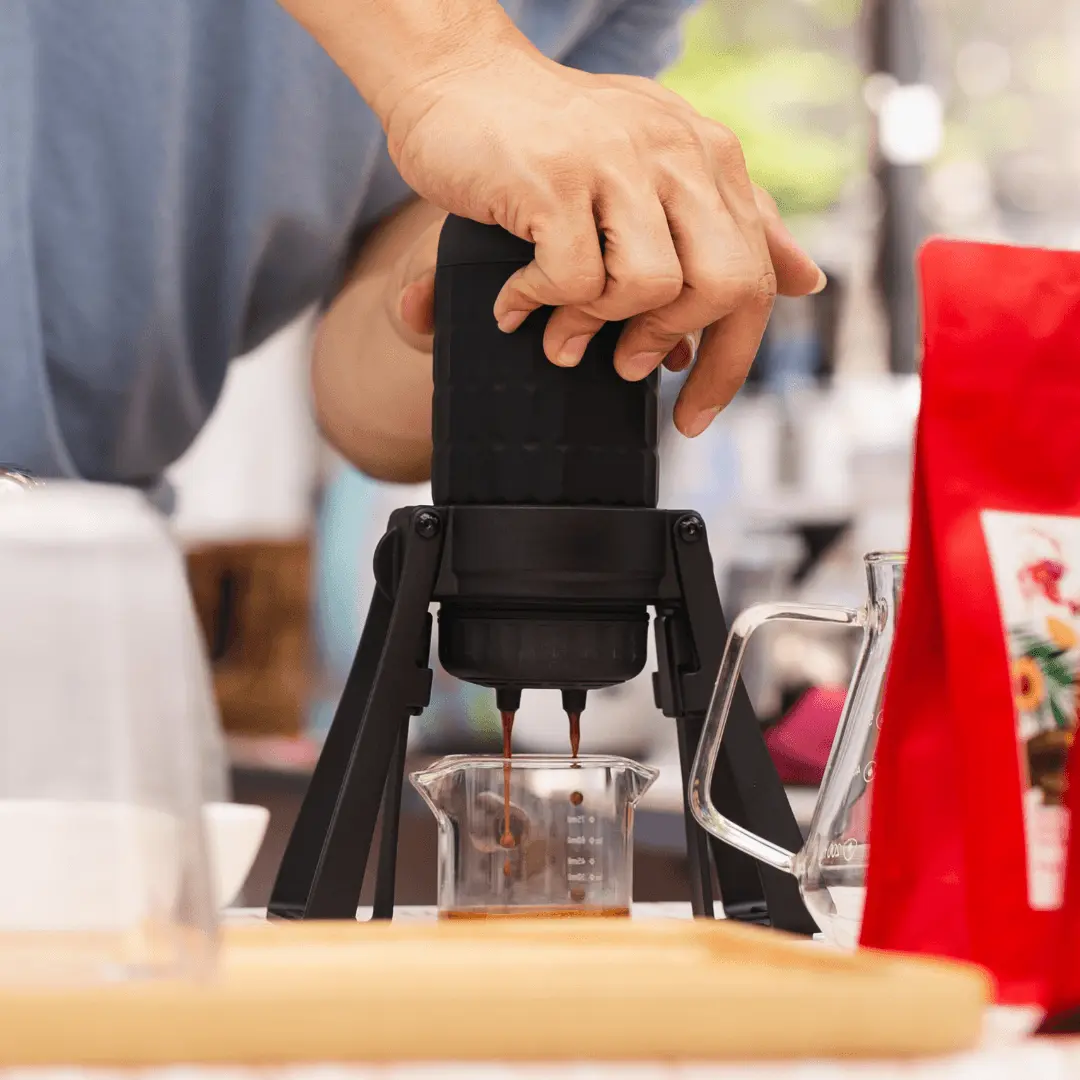
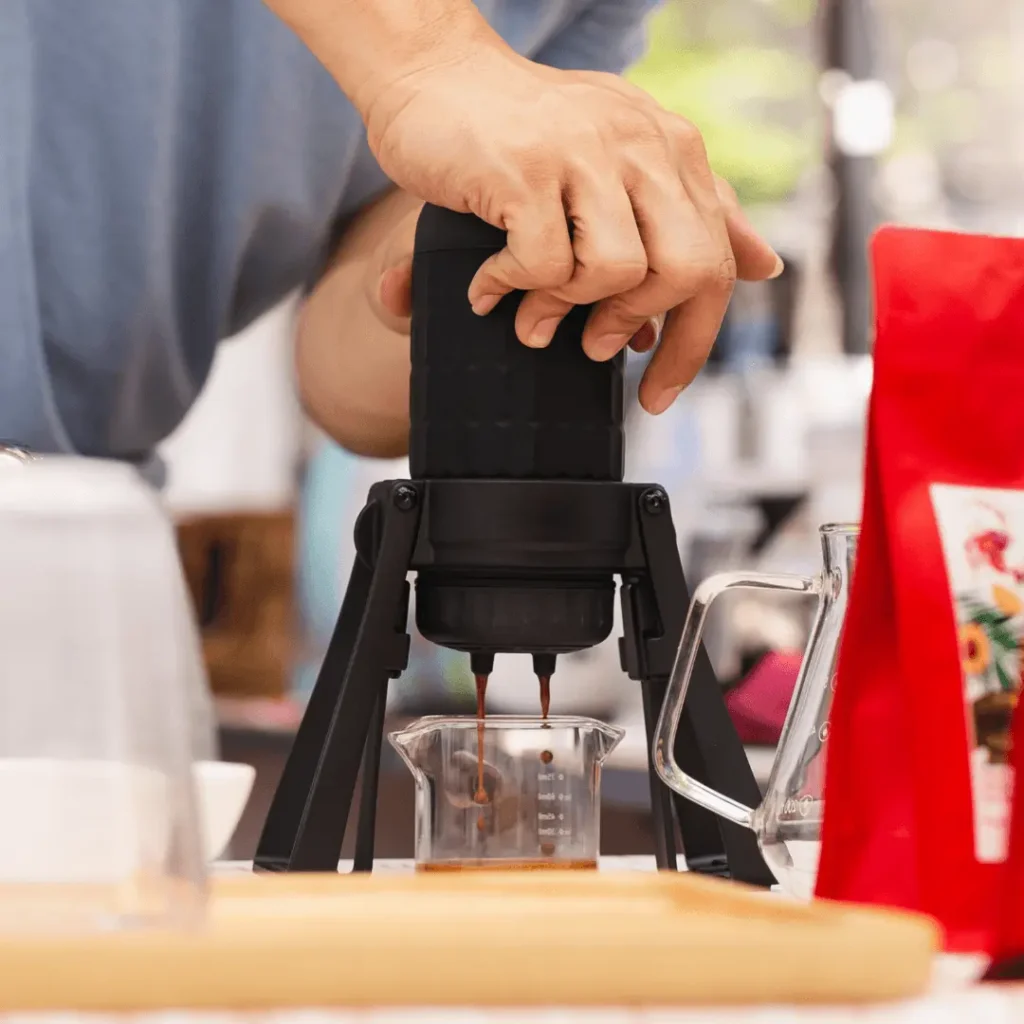
The AeroPress is a relatively new brewing device invented in 2005. It combines immersion and pressure. Coffee steeps in a cylinder, then a plunger pushes the liquid through a micro-filter.
How AeroPress Works
| Component | Details |
| Equipment Needed | AeroPress device, micro-filters or metal mesh, stirrer, kettle, scale, grinder |
| Grind Size | Fine to medium-fine (finer than pour-over, coarser than espresso) |
| Water Temperature | 80-90°C (175-195°F) for lighter roasts |
| Brew Time | 1.5 to 2.5 minutes |
| Typical Coffee Volume | 150-250 ml per batch (concentrate can be diluted) |
Flavor Profile of AeroPress
AeroPress produces a clean, smooth, and full-bodied cup without bitterness. The micro-filter removes most oils and all sediment. The pressure extraction creates a concentrated brew similar to espresso but smoother. It balances the clarity of pour-over with the body of French press.
Skill Level Required
AeroPress is forgiving but versatile. It requires:
- Understanding of inverted vs standard brewing methods.
- Ability to apply steady pressure without rushing.
- Experimentation with different recipes.
- Cleanup after each use (ejecting the puck).
The AeroPress has a cult following because of its adaptability. Dozens of championship recipes exist. You can brew a clean light roast or a concentrated pseudo-espresso. The learning curve is moderate.
Best For
- Traveling baristas who need a portable setup.
- Experimentation with different recipes and techniques.
- Single-cup brewing with minimal waste.
- Latte art course participants who want a non-espresso base for practice.
Head-to-Head Comparison: Which Method Wins?
This table compares the three methods across key parameters important for coffee brewing courses students.
| Parameter | Pour-Over | French Press | AeroPress |
| Flavor Clarity | Excellent | Moderate | Very Good |
| Body | Light to Medium | Heavy | Medium to Full |
| Oil Retention | None (paper filter) | High (metal filter) | Low (micro-filter) |
| Ease of Learning | Difficult | Easy | Moderate |
| Equipment Cost (INR) | 2,500 – 8,000 | 800 – 3,000 | 3,000 – 5,000 |
| Brew Time | 3-4 minutes | 4-5 minutes | 2 minutes |
| Batch Size | 1-2 cups | 2-6 cups | 1 cup (can dilute) |
| Portability | Low | Low | High |
| Cleanup Effort | Low (throw filter) | High (rinsing grounds) | Medium (eject puck) |
Choosing Based on Your Career Goals
The best method depends on why you are learning. Different career paths prioritize different skills.
For Aspiring Cafe Baristas
If you want to work in a specialty cafe, prioritize pour-over mastery. Most high-end cafes in Kolkata feature pour-over brew bars. Customers expect baristas to explain the process and execute it consistently. French press is less common on cafe menus. AeroPress is occasionally offered but not a daily driver.
A professional barista course that does not include extensive pour-over training is incomplete. Employers test pour-over skills during practical interviews.
For Home Coffee Enthusiasts
If you are learning for personal enjoyment, start with the French press. It is forgiving, affordable, and produces excellent coffee with minimal equipment. Once you understand extraction basics, move to the AeroPress for versatility. Finally, challenge yourself with pour-over to appreciate single-origin beans fully.
For Cafe Owners or Future Entrepreneurs
Learn all three methods but focus on operational efficiency. French press works well for table-side service and batch brewing. Pour-over creates premium pricing opportunities (a pour-over can be sold at a higher price point). AeroPress is excellent for coffee tasting events and workshops.
A cafe setup training program should include equipment selection guidance. Not every cafe needs all three methods. Your menu and customer volume determine what makes sense.
Equipment Investment Comparison
Understanding costs helps you budget for home practice or cafe setup. Prices below are approximate for Kolkata markets in 2026.
| Equipment Item | Pour-Over | French Press | AeroPress |
| Brewing Device | Hario V60 (INR 800), Chemex (INR 4,500) | INR 800 – 3,000 | INR 3,500 |
| Kettle | Gooseneck required (INR 2,000 – 6,000) | Standard kettle fine (INR 500 – 1,500) | Any kettle fine |
| Filters | Paper, recurring cost (INR 300 for 100) | None (metal mesh) | Paper (INR 400 for 350) or metal |
| Grinder | Burr grinder essential (INR 5,000+) | Blade grinder possible but not ideal | Burr grinder recommended |
| Scale | Essential (INR 1,000 – 3,000) | Optional | Recommended |
| Total Starter Setup | INR 8,000 – 15,000 | INR 2,000 – 5,000 | INR 5,000 – 9,000 |
Common Mistakes to Avoid in Each Method
Learning from others’ errors accelerates your progress. Enrolling in coffee brewing courses helps you avoid these pitfalls with hands-on guidance.
Pour-Over Mistakes
| Mistake | Consequence | Solution |
| Using a regular kettle | Uneven extraction, channeling | Buy or borrow a gooseneck kettle |
| Pouring too fast or too slow | Under-extraction or over-extraction | Maintain a steady, thin stream |
| Skipping the bloom phase | Uneven degassing, sour notes | Pour twice the coffee weight in water, wait 30 seconds |
| Water temperature too low | Flat, under-extracted coffee | Use a thermometer or boil and wait exactly 45 seconds |
French Press Mistakes
| Mistake | Consequence | Solution |
| Grinding too fine | Sludge in cup, bitter taste | Use a coarse, consistent grind |
| Steeping too long | Harsh, astringent flavors | Set a 4-minute timer, then plunge |
| Plunging forcefully | Disturbed grounds, muddy cup | Push slowly and steadily |
| Leaving coffee in the press after plunging | Continued extraction, bitterness | Decant immediately into a serving carafe |
AeroPress Mistakes
| Mistake | Consequence | Solution |
| Pressing too hard | Bypass extraction, bitter notes | Use firm but gentle pressure |
| Water too hot | Over-extracted, burnt taste | Start at 85°C for darker roasts |
| Not wetting the filter | Paper taste in coffee | Rinse filter with hot water before adding coffee |
| Using the standard method incorrectly | Water dripping through before plunging | Use inverted method for full immersion |
How a Professional Course Accelerates Learning
Self-learning through YouTube videos has limits. A structured barista coaching near me program provides three advantages that self-study cannot match.
Immediate Feedback
When you pour incorrectly, an instructor sees it immediately. They adjust your hand position, pour height, or circle pattern before you develop bad habits. Online videos cannot watch your technique.
Equipment Access
Professional barista training centre near me locations have commercial grinders, multiple dripper types, and temperature-controlled kettles. Buying this equipment for home practice costs lakhs. A course gives you access for a fraction of the price.
Cupping and Tasting Guidance
Tasting coffee is a skill. Instructors help you identify over-extraction (bitter, drying) versus under-extraction (sour, sharp). This sensory training is impossible to learn from a book.
For students searching barista course in Kolkata fees, consider what is included. A good course provides all equipment, coffee beans for practice, and certified instruction. The cheapest option may leave you with incomplete skills.
Brewing Method Recommendations by Coffee Type
Different coffees perform better with specific methods.
| Coffee Origin | Recommended Method | Why |
| Ethiopian Yirgacheffe | Pour-Over | Highlights floral and citrus notes |
| Colombian | AeroPress | Balances acidity and body |
| Brazilian | French Press | Emphasizes chocolate and nut notes |
| Indian Monsoon Malabar | French Press or AeroPress | Heavy body works well with metal filters |
| Kenyan | Pour-Over | Bright acidity needs clarity |
| Sumatran | French Press | Earthy flavors match full body |
If you are taking a latte art mastery program, you will focus mostly on espresso-based drinks. However, understanding manual brewing makes you a more complete coffee professional. Many cafe customers ask for pour-overs specifically.
The Role of Coffee Cupping in Professional Training
Coffee cupping is a standardized tasting method used by roasters and buyers to evaluate coffee quality. It is not a brewing method for daily drinking but an essential skill for advanced baristas.
What Happens in a Coffee Cupping Workshop
| Step | Action | Purpose |
| Grinding | Coarse grind of multiple samples | Prepare for aroma evaluation |
| Dry Aroma | Smell ground coffee before water | Assess fragrance |
| Water Addition | Hot water poured directly over grounds | Release volatile compounds |
| Crust Breaking | Stir the floating layer | Release wet aroma |
| Skimming | Remove floating grounds | Prepare for tasting |
| Slurping | Loudly spray coffee across the palate | Aerate and coat all taste receptors |
| Evaluation | Score acidity, body, sweetness, finish | Compare samples |
A coffee cupping workshop is typically part of advanced coffee techniques course curriculum. It trains your palate to distinguish subtle differences between origins, processing methods, and roast levels. This skill directly translates to better brewing decisions.
Frequently Asked Questions
1. Which brewing method is best for a beginner in coffee brewing courses?
The French press is the most beginner-friendly method. It requires minimal equipment, has a wide margin for error, and produces consistently good coffee. Master the French press first, then move to AeroPress, and finally challenge yourself with pour-over.
2. What is the difference between a latte art course and a coffee brewing course?
A latte art course focuses exclusively on steaming milk and pouring patterns into espresso-based drinks. A coffee brewing course covers manual methods like pour-over, French press, and AeroPress, along with grind calibration, extraction theory, and tasting skills. Both are valuable for different career paths.
3. How long does it take to master pour-over coffee?
Basic competency takes 2-3 weeks of daily practice. Mastery takes 3-6 months of consistent brewing and tasting. A structured coffee brewing courses program can accelerate this by 50% because instructors correct your technique in real time.
4. Is the AeroPress better than a French press for traveling?
Yes. The AeroPress is compact, lightweight, and nearly unbreakable. The French press is made of glass and has a large carafe. For travel, pack an AeroPress, a hand grinder, and a small kettle. You can brew excellent coffee in a hotel room.
5. Which brewing method produces the strongest coffee?
AeroPress produces the most concentrated coffee because of the pressure extraction. French press produces the most full-bodied coffee due to retained oils. Pour-over produces the cleanest but lightest body. “Strong” can mean caffeine content or flavor intensity—caffeine is similar across all methods for the same coffee dose.