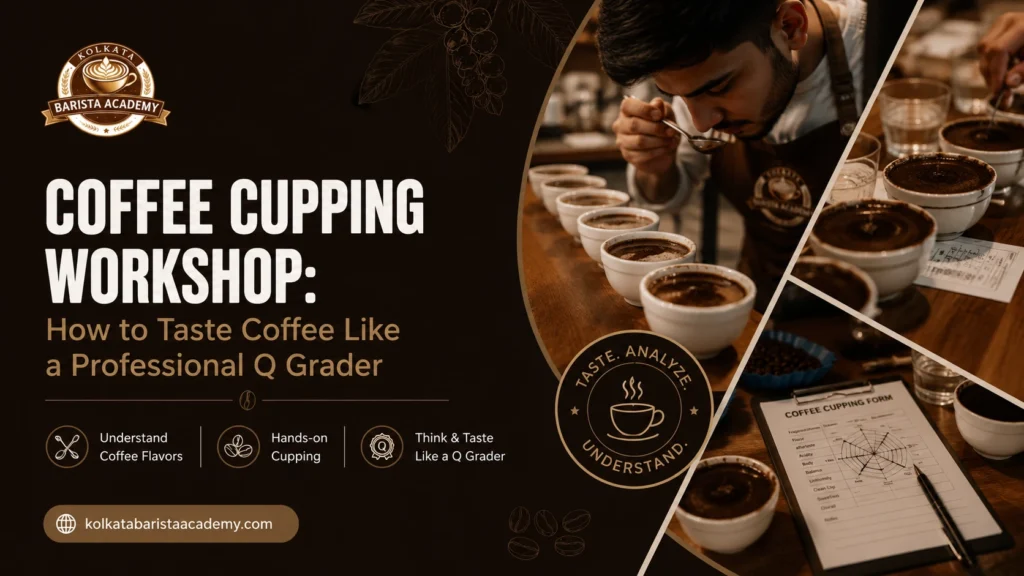
Coffee is more than a daily beverage. For coffee professionals, every cup tells a story about origin, processing, roasting, and brewing techniques. Understanding these characteristics requires trained sensory skills, and that is where a Coffee Cupping Workshop: How to Taste Coffee Like a Professional Q Grader becomes valuable.
Coffee cupping is the globally accepted method of evaluating coffee quality. Professional Q Graders use cupping techniques to assess aroma, acidity, body, sweetness, and flavor balance. Whether you are an aspiring barista, café owner, roaster, or coffee enthusiast, learning the art of coffee tasting can significantly improve your understanding of specialty coffee.
At Kolkata Barista Academy, a structured coffee cupping workshop helps participants develop sensory skills and gain deeper insights into the world of specialty coffee.
What Is Coffee Cupping?
Coffee cupping is a standardized method used by coffee professionals to evaluate and compare different coffees. The process involves tasting coffee under controlled conditions to identify flavor characteristics and quality.
Objectives of Coffee Cupping
| Objective | Purpose |
| Flavor Evaluation | Identify tasting notes and characteristics |
| Quality Assessment | Determine coffee standards |
| Defect Detection | Identify processing or roasting issues |
| Origin Recognition | Understand regional flavor profiles |
| Sensory Development | Improve tasting abilities |
Coffee cupping is an essential skill for anyone pursuing a career in specialty coffee.
Who Is a Professional Q Grader?
A Q Grader is a certified coffee taster trained to evaluate coffee according to internationally recognized standards.
Responsibilities of a Q Grader
- Assess coffee quality.
- Identify flavor profiles.
- Evaluate defects.
- Grade specialty coffee.
- Assist coffee producers and roasters.
Professional Q Graders play an important role in maintaining quality standards within the coffee industry.

Why Attend a Coffee Cupping Workshop?
A professional coffee cupping workshop offers practical knowledge that cannot be gained through reading alone.
Benefits of Joining a Workshop
| Benefit | Impact |
| Improved Sensory Skills | Better understanding of coffee flavors |
| Professional Development | Builds coffee industry expertise |
| Better Brewing Decisions | Helps improve coffee recipes |
| Enhanced Product Knowledge | Supports café and retail operations |
| Specialty Coffee Appreciation | Deepens coffee understanding |
Learning how to taste coffee professionally is a valuable skill for both beginners and experienced baristas.
Understanding the Coffee Flavor Wheel
The Coffee Taster’s Flavor Wheel is one of the most important tools used during cupping sessions.
Flavor Categories
| Category | Examples |
| Fruity | Berry, Citrus, Apple |
| Sweet | Caramel, Honey, Chocolate |
| Floral | Jasmine, Rose |
| Nutty | Almond, Hazelnut |
| Spicy | Cinnamon, Clove |
Understanding these flavor categories allows professionals to describe coffee more accurately.
Step-by-Step Coffee Cupping Process
Step 1: Evaluating the Dry Aroma
Before adding water, participants smell the ground coffee to identify initial aromas.
Common Dry Aromas
- Chocolate
- Citrus
- Nuts
- Floral notes
- Spices
Step 2: Pouring Hot Water
Hot water releases volatile compounds that reveal the coffee’s aroma and flavor potential.
Step 3: Breaking the Crust
After brewing, a crust forms on the surface of the coffee.
Why Breaking the Crust Matters
| Benefit | Importance |
| Aroma Release | Reveals fragrance compounds |
| Quality Assessment | Helps identify defects |
| Flavor Evaluation | Provides sensory information |
Step 4: Tasting the Coffee
Participants use cupping spoons to slurp the coffee, spreading it across the palate.
Step 5: Recording Sensory Notes
Professional tasters document their observations using standardized scoring sheets.
Key Attributes Evaluated During Coffee Cupping
Aroma
The fragrance of the coffee before and after brewing.
Acidity
Acidity is not sourness. It refers to brightness and liveliness in the cup.
Body
The weight and texture of coffee in the mouth.
Sweetness
Natural sugars contribute to balance and complexity.
Aftertaste
The flavors that remain after swallowing.
| Attribute | Description |
| Aroma | Smell of the coffee |
| Acidity | Brightness and liveliness |
| Body | Mouthfeel and texture |
| Sweetness | Natural sugar perception |
| Aftertaste | Lingering flavors |
These characteristics help determine coffee quality and overall experience.
How Coffee Origin Affects Flavor
Different growing regions produce unique flavor profiles.
Coffee Flavor by Origin
| Origin | Common Flavor Notes |
| Ethiopia | Floral, Berry, Citrus |
| Colombia | Chocolate, Caramel |
| Brazil | Nutty, Sweet |
| Kenya | Fruity, Wine-like |
| India | Spice, Chocolate |
Understanding origin characteristics helps coffee professionals make informed purchasing and brewing decisions.
Relationship Between Coffee Cupping and Brewing
A coffee cupping workshop also enhances brewing skills.
Benefits for Brewing Professionals
- Better recipe development.
- Improved coffee selection.
- Enhanced extraction understanding.
- Greater consistency in beverage preparation.
These skills complement various coffee brewing courses and contribute to overall coffee expertise.
Why Baristas Should Learn Coffee Cupping
Baristas who understand coffee flavors can create better customer experiences.
Advantages for Baristas
| Skill | Benefit |
| Flavor Recognition | Improved beverage recommendations |
| Quality Assessment | Better espresso preparation |
| Recipe Adjustment | Greater consistency |
| Customer Engagement | Enhanced coffee education |
Coffee cupping is often included in an advanced coffee techniques course because sensory training is essential for professional development.
Coffee Cupping and Latte Art Education
Although sensory analysis and latte art are different skills, they complement each other.
A barista who can create beautiful latte art and also understand flavor profiles becomes a more complete coffee professional.
Many students who attend a latte art course later explore sensory education to improve their coffee knowledge.
Similarly, a latte art mastery program often incorporates coffee tasting sessions to develop a deeper appreciation of coffee quality.
Equipment Used in a Coffee Cupping Workshop
Essential Tools
| Equipment | Purpose |
| Cupping Bowls | Standardized tasting |
| Cupping Spoons | Sampling coffee |
| Grinder | Uniform grind size |
| Scale | Accurate measurements |
| Timer | Brewing consistency |
Professional equipment ensures accurate and repeatable tasting sessions.
Common Coffee Defects Identified During Cupping
Defects Professionals Learn to Recognize
| Defect | Description |
| Over Fermented | Unpleasant sour notes |
| Earthy | Mud-like flavors |
| Moldy | Musty characteristics |
| Burnt | Excessive roast flavors |
| Woody | Dry, stale notes |
Identifying defects is an important skill for anyone working in specialty coffee.
Who Should Join a Coffee Cupping Workshop?
The program is ideal for:
- Aspiring baristas
- Café owners
- Coffee roasters
- Hospitality professionals
- Coffee enthusiasts
- Entrepreneurs entering the café industry
No prior experience is required to begin developing sensory skills.
Career Benefits of Coffee Sensory Training
Professional Opportunities
| Career Path | Industry |
| Specialty Barista | Cafés |
| Coffee Roaster | Roasteries |
| Quality Analyst | Coffee Exporters |
| Coffee Consultant | Hospitality |
| Q Grader Candidate | Specialty Coffee Industry |
Sensory education opens new career opportunities and enhances professional credibility.
Why Coffee Education Matters in 2026
The specialty coffee market is expanding rapidly. Consumers are becoming more knowledgeable about coffee origins, processing methods, and flavor profiles.
Businesses increasingly seek professionals who understand both technical preparation and sensory evaluation. A structured Coffee Cupping Workshop: How to Taste Coffee Like a Professional Q Grader helps participants develop these essential skills and stay competitive in the growing coffee industry.
Conclusion
Coffee tasting is both a science and an art. A professional coffee cupping workshop teaches participants how to evaluate coffee systematically and understand the subtle differences that make each coffee unique.
From learning aroma identification and flavor analysis to understanding defects and origin characteristics, cupping provides valuable knowledge for anyone pursuing a career in specialty coffee.
Combined with a latte art course, coffee brewing courses, an advanced coffee techniques course, and a latte art mastery program, sensory education creates well-rounded coffee professionals capable of delivering exceptional coffee experiences.
Frequently Asked Questions
1. What is a coffee cupping workshop?
A coffee cupping workshop teaches participants how to taste and evaluate coffee using professional sensory techniques.
2. Who can join a coffee cupping workshop?
Anyone interested in coffee, including baristas, café owners, and beginners, can participate.
3. What does a Q Grader do?
A Q Grader evaluates coffee quality and identifies flavor characteristics according to international standards.
4. Is coffee cupping difficult to learn?
No. With practice and guidance, anyone can develop sensory tasting skills.
5. Why is coffee cupping important?
It helps professionals understand coffee quality, flavor profiles, and brewing potential.
6. Does coffee cupping improve brewing skills?
Yes, sensory training improves recipe development and coffee selection.
7. What equipment is used during cupping?
Common tools include cupping bowls, spoons, grinders, scales, and timers.
8. Can beginners join a coffee cupping workshop?
Yes, no prior experience is required.
9. Is coffee cupping included in advanced coffee training?
Yes, many advanced coffee techniques courses include sensory training.